Steel Wine Cellar Doors in Austin, TX
A wine room door should protect the collection and showcase it beautifully.
Wine cellar and wine room doors need to do more than look impressive. They also need to support consistent conditions through quality seals, proper glazing and careful fabrication.
Our custom steel wine room doors combine strong visual presence with performance-minded detailing. Glass panels create a premium display effect while high-quality weather stripping and precise construction help maintain the environment inside.
Whether the design leans sleek and modern or more traditional, a steel wine room door becomes a signature interior feature while helping the room function as intended.
Why Homeowners Choose This Style
- Insulated design considerations for wine storage areas
- Decorative glass options for display-driven spaces
- Premium seals and detailing for improved consistency
- Tailored for dedicated cellars or showpiece wine rooms
Popular Applications
- Wine room
- Interior feature room
Need help choosing the right configuration? Visit our product catalog or request a quote and we will help match the design to your opening, layout and finish preferences.
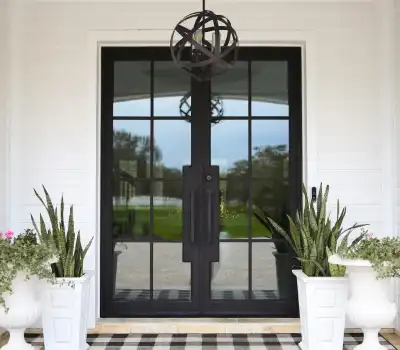
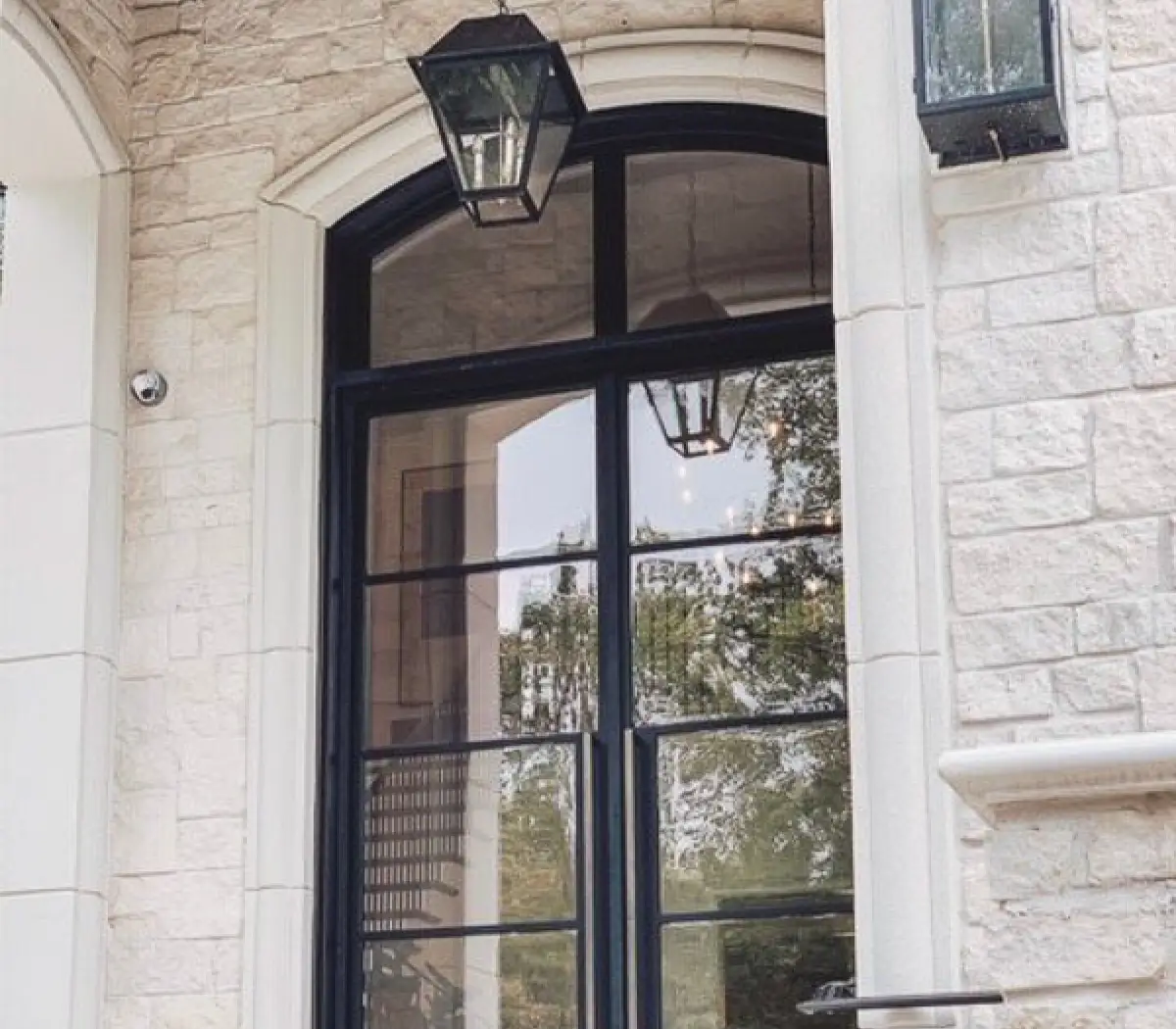
What a Wine Room Door Has to Do
A wine cellar door looks like an interior door and performs like an exterior one. On one side is conditioned living space, and on the other is a room held at roughly 55 degrees and 60 to 70 percent relative humidity. That is a genuine environmental boundary, and the door has to seal it properly or the cooling unit runs continuously and the humidity migrates out into the house.
This is why a standard interior door does not work for a wine room. It has no compression seal, no thermal break, and single glazing that will condense on the warm face whenever the humidity inside is doing its job. What is required is an insulated, thermally broken, fully gasketed assembly, which is exactly how an exterior door is built.
Steel suits the application unusually well. The frame stays slim so the cellar remains visible, which is normally the entire point of a glazed wine room, and steel is dimensionally unaffected by the humidity differential across the door. A timber door in that position is being asked to hold flat with two different moisture conditions on its two faces, which is a losing proposition over time.
Key Features of Our Wine Cellar Doors
Full perimeter compression seals
Gaskets on all four sides, compressed by the locking hardware, so the door seals as an environmental boundary rather than merely closing. This is the single most important element of the specification.
Thermally broken frame
A thermal barrier through the frame prevents the profile from conducting cold to the warm face, which is what stops condensation forming on the room side of the frame.
Insulated glazing
Double-glazed units with a low-emissivity coating reduce heat transfer into the cellar and keep the warm-side glass surface above the dew point of the surrounding room.
Slim sightlines for display
A wine room is usually glazed because the owner wants to see into it. Steel keeps the frame fine so the bottles and the racking are what you see, not the door.
Multipoint locking for even seal compression
Locking that engages at several heights pulls the door uniformly into its gaskets. A single latch compresses the seal at one point and leaves the top and bottom to leak.
Corrosion-resistant finishing
The cellar face lives in sustained high humidity, so surface preparation and coating specification are treated as they would be for an exterior door rather than an interior one.
Benefits of a Properly Built Wine Cellar Door
The door is the weakest point in most wine room enclosures, and getting it right pays for itself.
- The cooling unit runs less. A properly sealed door reduces the load on the refrigeration system, which lowers running cost and extends equipment life.
- Humidity stays where it belongs. Correct sealing keeps the cellar at the humidity that protects corks and stops it migrating into the surrounding house.
- No condensation on the warm face. Thermal breaks and insulated glazing keep the room-side surfaces above dew point, which is what prevents water running down the glass.
- The collection stays visible. A slim steel frame around a large glazed panel turns the cellar into a display rather than hiding it behind a solid door.
- Stable conditions protect the wine. Temperature and humidity swings are what damage a collection, and the door is the largest single opportunity for both.
- Steel holds flat across the differential. Two different climates on two faces of a door is a demanding condition, and steel is indifferent to it in a way timber is not.
Customization Options
Wine room doors are drawn to the opening and to the conditions the cellar is held at.
Single, pair or full glazed wall
A single leaf for a modest cellar, a French-style pair for a wider opening, or a door integrated into a fully glazed partition where the whole cellar wall is glass.
Glazing specification
Insulated units are effectively required. Low-emissivity coatings improve performance, and UV-filtering glass is worth considering because light exposure degrades wine. See the glass options.
Glazing bar layout
A single clear pane for an uninterrupted view of the racking, or a divided grid where the cellar sits in a more traditional interior.
Finish
Matte black, bronze, graphite, blackened steel or clear-coated raw steel. Finishes are commonly matched to steel interior doors elsewhere in the house.
Threshold and sill detail
The sill has to complete the seal at the base without creating a trip hazard. We detail this to the floor build-up on both sides, since cellar and room floor finishes often differ.
Hardware
Pulls and levers in matched finishes, with the locking gear chosen to deliver even seal compression. Locking options are covered in the lockset guide.
Materials & Craftsmanship
Wine cellar doors are fabricated to exterior-door standards even though they sit inside the house. Welded steel section, corners dressed and ground, thermally broken frame, insulated glazing and full perimeter gasketing. The specification is driven by the environmental differential across the door rather than by where the door happens to be located.
Seal compression is set in the shop with the door hung in its own frame. Even compression around the full perimeter is what makes the assembly work, and it is achieved by adjusting the hardware engagement and the gasket against the actual door and frame together, not by assuming that components sized on a drawing will meet correctly.
The cellar-side face is prepared and coated for sustained high humidity. This is a more demanding environment than most interior surfaces experience, and the surface preparation underneath the coating matters as much as the coating itself. Glazing is bedded on setting blocks and sealed so the units carry no load through the edge seal.
We coordinate the door with the cellar build. The opening has to be plumb and square, the floor levels on both sides have to be known before the sill is detailed, and the refrigeration designer needs to know what the door contributes to the thermal load. These are questions that get answered before fabrication rather than after the cellar is running and the glass is fogging.
Where Steel Wine Cellar Doors Work Best
Climate-controlled residential cellars
The core application. Any room held at cellar temperature and humidity needs a door built as an environmental boundary.
Under-stair and closet conversions
Small cellars built into an existing recess, where a glazed steel door turns a utilitarian space into a feature.
Glazed display cellars in living spaces
Cellars positioned as a visual element in a dining or living room, where the frame needs to be as fine as possible.
Wine walls and tasting rooms
Larger installations with a full glazed wall and an integrated door, often in Austin and Hill Country homes built around entertaining.
Restaurants and tasting rooms
Commercial cellars where the collection is part of the room's design and the door is opened many times a day.
Humidors and other controlled rooms
The same construction suits any small room held at a controlled temperature and humidity distinct from the space around it.
Why Choose OMG Steel Doors for Your Wine Room
Most wine cellar door problems are sealing problems, and they show up as a refrigeration unit that never stops running or glass that fogs on the room side. Both trace back to a door that was specified as an interior door when the application required an exterior one. We build these as sealed, thermally broken, insulated assemblies from the outset because that is what the physics of the opening demands.
Design, engineering, fabrication and installation stay in house, which matters here because seal compression is set during fabrication and preserved during installation. A door that gasketed perfectly in the shop and was then fitted into a frame set out of plumb will not seal, and having one company responsible for both ends of that removes the failure mode.
We coordinate with cellar builders and refrigeration designers so the door is accounted for in the thermal load calculation and the opening is prepared correctly. It is a short conversation early that avoids an expensive discovery later.
We work with homeowners, Austin architects, builders and hospitality clients across the greater Austin area and Central Texas, with projects in Dallas, Houston, San Antonio and Fort Worth. Quotes include the fabricated leaf, thermally broken frame, insulated glass, seals, hardware and professional installation, described further on our installation page. Completed work is shown on the projects page.
Frequently Asked Questions
Can I use a standard interior door on a wine cellar?
You can install one, but it will not perform. A standard interior door has no compression seal, no thermal break and single glazing, so conditioned air escapes continuously, the cooling unit runs far more than it should, and the glass will condense on the warm side whenever the cellar is holding proper humidity. If the room is genuinely climate controlled, it needs a sealed insulated door.
Why does my wine cellar glass fog up?
Because the room-side glass surface is below the dew point of the air in that room. Warm humid air meets cold glass and condenses. The fix is insulated glazing with a low-emissivity coating and a thermally broken frame, which together keep the warm-face surface temperature above dew point. Single glazing in a non-broken frame will fog in almost any Central Texas summer.
Should wine cellar glass filter UV?
It is worth specifying. Light exposure, and ultraviolet in particular, degrades wine over time, so if the cellar is glazed and sits in a daylit room, UV-filtering glass is a sensible precaution. It costs relatively little at the point of specification and cannot be added afterwards. Our glass options page covers the choices.
Does the door need a seal at the floor?
Yes. A door sealed on three sides and open at the bottom is not sealed, and because cold air falls, the base is where conditioned air escapes fastest. We detail the sill to complete the perimeter seal while keeping the threshold flush enough to avoid a trip hazard, working from the actual floor build-up on both sides.
Can the whole cellar wall be glass with a door in it?
Yes, and it is a popular arrangement. We build the fixed glazed panels and the door as one coordinated system so the frame lines run consistently across the wall. All the glazing is insulated and the frames thermally broken, since the whole wall, not just the door, is the environmental boundary.
How do steel wine cellar doors handle the humidity?
Well, provided the finishing is specified for it. Steel is dimensionally unaffected by humidity, which is its main advantage here, since it will not swell or warp with a different moisture condition on each face the way timber does. The cellar-side face is prepared and coated to the standard we would use on an exterior door.
Will a better door reduce my running costs?
It should. The door is usually the largest thermal weak point in a cellar enclosure, so sealing it properly reduces how hard the refrigeration works. That means lower energy use and less wear on the equipment. It also produces more stable conditions inside, which is the actual reason to build a cellar in the first place.
Seal your cellar properly
Send us the opening dimensions and the temperature and humidity your cellar is designed to hold, and we will come back with a specification and a quote. Serving Austin and Central Texas, with projects across Dallas, Houston, San Antonio and Fort Worth.


