Steel Casement Windows in Austin, TX
Casement windows are a dependable choice when the design calls for airflow, a tight seal and a clean exterior profile.
Steel and iron casement windows are hinged on the side and open outward, which helps them catch breezes more effectively than many other window styles. That makes them a practical option for kitchens, living spaces and bedrooms where natural ventilation matters.
Because they close firmly against the frame, casement windows are also associated with strong weather sealing. With custom steel or iron construction, they gain a slimmer, more architectural appearance that works well in both contemporary and transitional homes.
Projects in Bee Cave, Barton Creek, Round Rock and Cedar Park often lean toward casement windows when the goal is to balance daylight, ventilation and a more elevated window design.
Why Homeowners Choose This Style
- Side-hinged operation that helps capture cross-breezes
- Strong closing seal with insulated glass options available
- Slimmer custom steel or iron sightlines than many stock windows
- Works well beside fixed windows and larger feature groupings
Popular Applications
- Kitchen
- Living spaces
- Bedrooms
Need help choosing the right configuration? Visit our product catalog or request a quote and we will help match the design to your opening, layout and finish preferences.
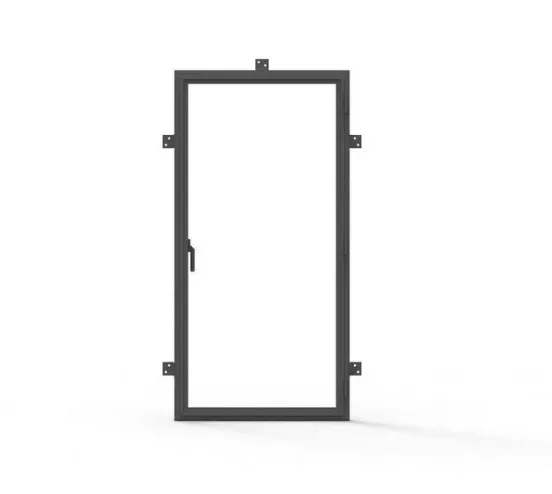
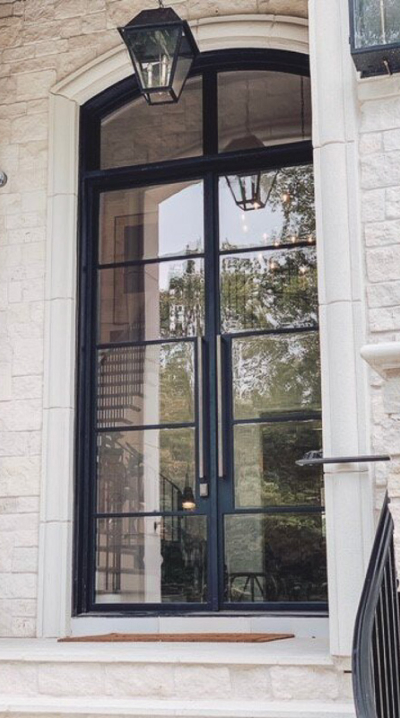
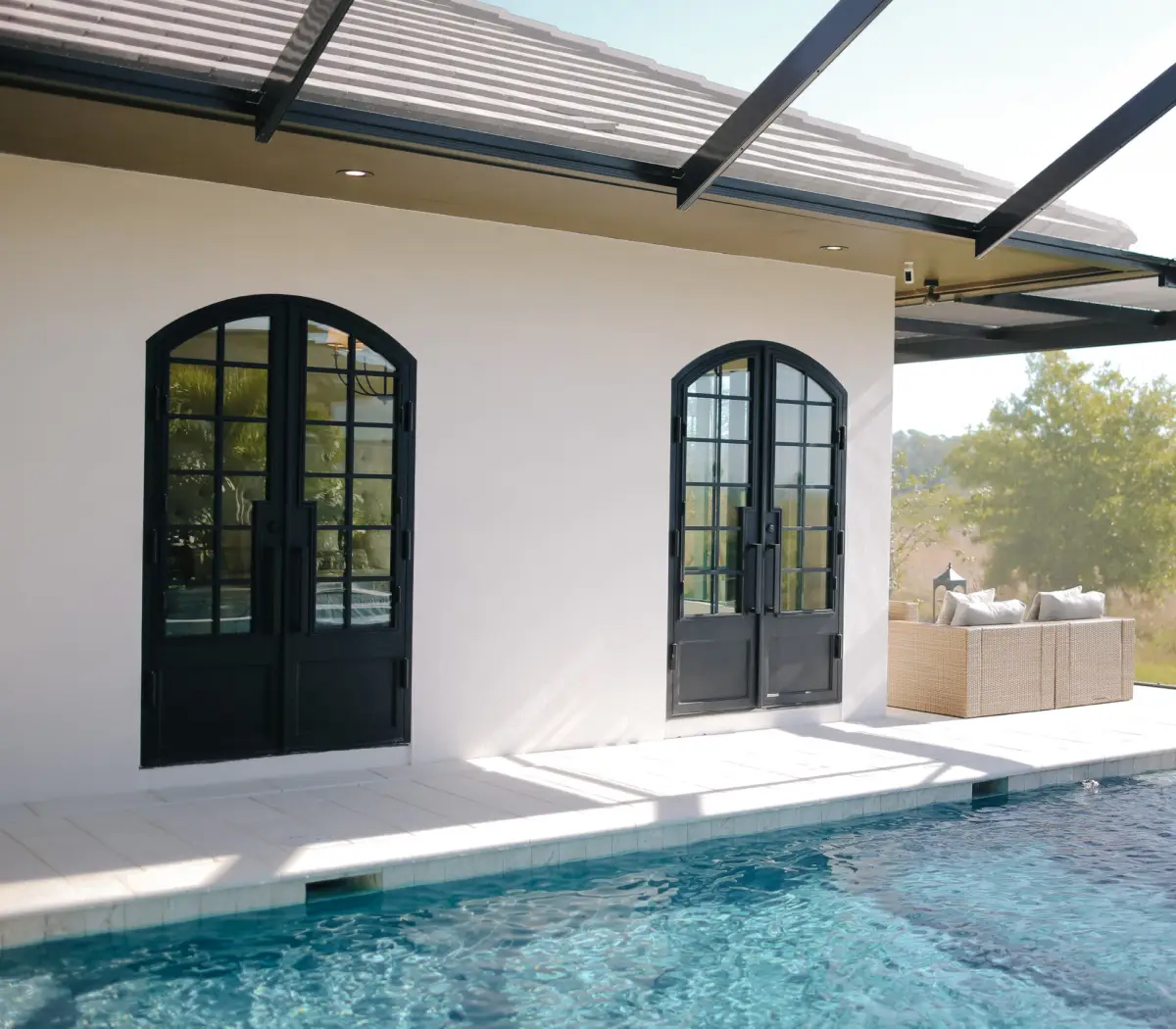
How Steel Casement Windows Work
A casement window is hinged at the side and swings outward like a small door, operated by a crank or a handle with a locking mechanism that draws the sash into its seals. The whole sash opens, which distinguishes it from a sash window where only part of the opening ever clears.
That full opening is the practical advantage. A casement gives you the entire aperture for ventilation, and because the open sash projects outward it also catches passing air and directs it into the room, which a sliding or hung window cannot do. On a still Austin evening that difference is noticeable.
The other advantage is sealing. When a casement closes, its locking hardware pulls the sash inward against compression gaskets around the full perimeter, so the seal tightens as it locks. Sliding windows seal by brushing past a seal rather than compressing it, which is why casements consistently outperform them on air leakage.
Key Features of Our Steel Casement Windows
Full aperture ventilation
The entire sash swings clear, so you get the whole opening for airflow rather than the half a sliding or hung unit provides.
Compression sealing on closing
Multipoint locking draws the sash into perimeter gaskets, so the window seals tighter as it locks. This is why casements lead the field on air tightness among operable windows.
Slim steel sightlines
Steel frames the sash in a much narrower section than alternatives, so even a divided casement keeps a fine frame line and a high proportion of glass.
Thermally broken frames
A thermal barrier through frame and sash controls conducted heat and prevents condensation on interior surfaces during a Central Texas cold snap.
Multipoint locking hardware
Locking points engage the frame at several positions around the sash, which both secures the window and delivers the even seal compression that makes it perform.
Inward or outward opening
Outward opening is standard and sheds water best. Inward opening suits upper floors where cleaning access from inside matters, and can be combined with a tilt function.
Benefits of Steel Casement Windows
Casements are the best-performing operable window type, and steel gives them the slimmest frame available.
- The best ventilation of any window type. The full opening clears and the open sash scoops passing air into the room.
- The tightest seal among operable windows, because compression sealing beats the brush seals that sliding units rely on.
- More glass in the same opening. Slim steel sections mean the frame takes less of the aperture than any alternative material.
- Excellent security. Multipoint locking engaging the frame at several points is substantially harder to defeat than a single center latch.
- Easy cleaning. The sash swings clear of the frame so both faces of the glass are reachable, which matters on upper floors.
- Long service life. Steel sashes stay square and keep meeting their seals correctly rather than dropping out of adjustment over the years.
Customization Options
Casements are drawn to the opening and to how the room needs to ventilate.
Single, paired or banked
One sash, a pair meeting at the center, or a run of several units banked together in one welded frame across a wide opening.
Combination with fixed glazing
The efficient arrangement on most elevations is a large fixed pane with a casement alongside for ventilation, all within a single frame.
Glazing bar layout
A clear sash for maximum view, or divided lites in a grid drawn to match the other windows on the elevation. Bar proportion is what sets the character.
Glass specification
Low-emissivity solar control coatings by orientation, laminated for acoustic performance near a busy street, obscured for bathrooms. See the glass options.
Hardware
Crank operators for high or hard-to-reach positions, or lever handles for windows within easy reach. Finishes are matched across the project.
Finish
Matte black, bronze, graphite, warm grays or clear-coated raw steel, coordinated with doors and other steel window types on the same building.
Materials & Craftsmanship
Frames and sashes are fabricated from steel section, welded at the corners, then dressed and ground. On a casement the sash sits within the frame with a visible reveal all round, so any inconsistency in that gap is directly legible. Squareness of both the sash and the frame is held tightly for that reason.
Every sash is hung in its own frame and cycled in the shop before finishing. Hinge adjustment, seal compression and locking engagement are set there with the actual pair of components, because a sash and frame that were made to the same drawing still need to be matched to each other to seal evenly.
Finishing runs through degreasing, mechanical preparation and a coating system chosen for full exterior exposure. Casement sashes take weather on their outer face and on the exposed edges when open, so the coating has to cover the full profile properly rather than just the visible faces.
Insulated units are bedded on setting blocks so the glass carries no load through its edge seal, which is what preserves the unit long term. Hardware is specified against the sash weight and size, since an operator sized to the minimum will feel stiff and will wear faster than one chosen with margin.
Where Steel Casement Windows Work Best
Bedrooms and living spaces
Wherever real ventilation matters, a casement moves more air than any other window type of the same size.
Kitchens
Crank-operated casements above a counter or sink can be reached and operated without leaning across the worktop.
Cross-ventilation strategies
Casements on opposite elevations scoop and exhaust air effectively, which reduces reliance on air conditioning through an Austin spring and autumn.
Alongside large fixed panes
The standard efficient arrangement, giving a big view window with a discreet ventilation sash in the same assembly.
Upper floors
Inward opening casements allow both faces of the glass to be cleaned safely from inside the room.
Renovations to period Austin homes
Divided-lite steel casements suit older houses in Hyde Park, Clarksville and Travis Heights, updating performance without changing the architectural character.
Why Choose OMG Steel Doors for Casement Windows
A casement is only as good as the match between sash and frame, and that match is made during fabrication and preserved during installation. We hang and cycle every sash in its own frame in the shop, then install with our own crews, so the compression the window was built to achieve is the compression it actually delivers on your wall.
Hardware is specified to the sash rather than to a size band. An operator working at the top of its range feels stiff from the first day and wears quickly, which is a common complaint about casements and an avoidable one.
We specify glass per elevation. On a Central Texas house the west and south windows need solar control that the north elevation does not, and treating the whole building identically either wastes money or leaves the hot side uncomfortable. Our energy efficiency page covers the reasoning.
We work with homeowners, Austin architects and custom builders across the greater Austin area and Central Texas, with projects in Dallas, Houston, San Antonio and Fort Worth. Completed work is on our projects page, and quotes cover the fabricated frames and sashes, glazing, hardware, weatherseals and professional installation, described on the installation page.
Frequently Asked Questions
Are casement windows better than sliding windows?
For ventilation and air tightness, yes, clearly. A casement opens its full aperture and seals by compressing gaskets as it locks, whereas a sliding window opens half its aperture and seals by brushing past a seal. Sliders have their place where a projecting sash would obstruct a walkway or where the opening is very wide, but on performance the casement wins.
Should casements open inward or outward?
Outward is standard and handles water better, since gravity works with the seal rather than against it. Inward opening is worth considering on upper floors, because it lets you clean the outer face of the glass from inside the room, and it can be combined with a tilt position for secure background ventilation. We will recommend based on the floor level and the exposure.
Do steel casement windows seal well enough for Texas summers?
Yes. Compression sealing with multipoint locking is the tightest arrangement available in an operable window, which is exactly what you want when the air conditioning is running for months at a time. Combined with a thermal break and low-emissivity insulated glazing, a steel casement performs well in the Central Texas climate.
Can casements be combined with fixed windows in one frame?
Yes, and it is usually the best approach. A large fixed pane for view and light with a casement sash alongside for ventilation, all in a single welded frame, gives better performance and a lower cost than making the whole opening operable.
How wide can a casement sash be?
There is a practical limit, because a side-hinged sash is cantilevered from its hinges and a very wide one puts significant load on them and becomes awkward in wind. Tall and relatively narrow proportions suit casements best. Where an opening is wide, we would bank several casements together or combine them with fixed glazing rather than build one oversized sash.
Are steel casement windows suitable for historic homes?
They are often the correct choice. Steel casements with divided lites were the standard window in a great many houses from the early and mid twentieth century, so replacing failed originals with new steel units is architecturally faithful while bringing thermal performance up to a modern standard. We draw the bar layout to match what was there.
What maintenance do casement windows need?
Keep the hinges and operator lubricated annually and check the seals for damage. If the window starts to feel stiff or stops sealing evenly, it usually needs a hinge or lock adjustment rather than any part replacement, which is a short service visit. Wash the frames a few times a year and touch up coating damage promptly.
Plan your steel casement windows
Send us your openings, elevations and orientations, and we will come back with a configuration, a glazing specification per elevation and a quote. Serving Austin and Central Texas, with projects across Dallas, Houston, San Antonio and Fort Worth.


