Steel Pivot Doors in Austin, TX
Pivot doors are chosen for Austin projects that need visual impact, structural confidence and a cleaner modern entry.
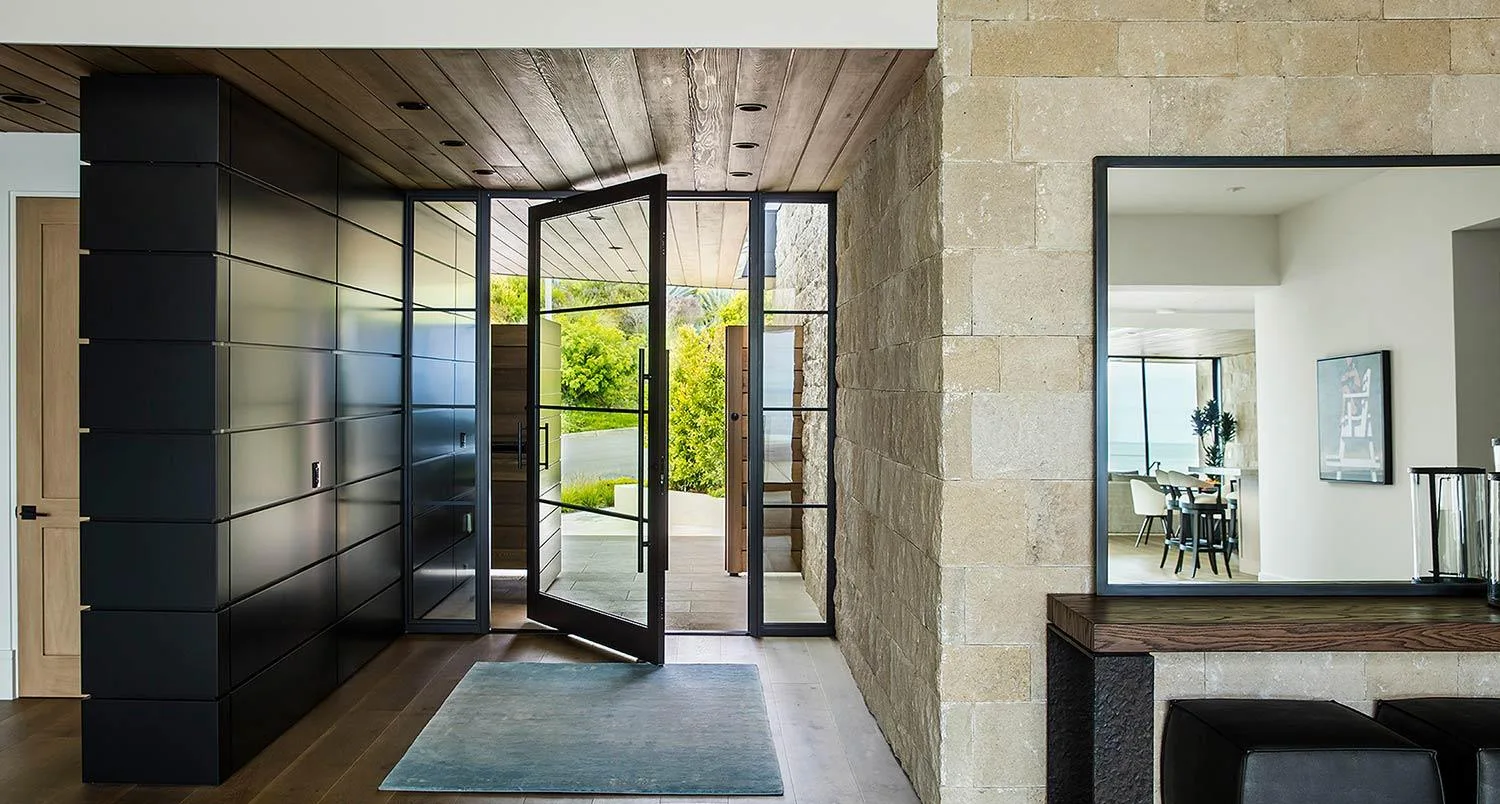
Steel and iron pivot doors create a dramatic front-door experience because they support larger panels, slimmer framing and a more architectural approach than many conventional hinged entries. They are a strong fit for luxury homes, custom builds and statement remodels where curb appeal matters.
Our pivot door systems can be tailored with custom dimensions, insulated glass, thermally improved construction, premium hardware and finish options that suit both contemporary and transitional homes. The goal is to match the scale of the opening while keeping daily operation smooth and dependable.
From Westlake and Bee Cave to Rollingwood and Steiner Ranch, Austin-area clients often ask for pivot doors that feel bold without looking heavy. Thin sightlines, dark finishes and carefully selected glass packages help strike that balance.
Why Homeowners Choose This Style
- Custom sizes for oversized front entries and modern facades
- Thermally improved frame and insulated glass options available
- Flexible finish, glass and hardware selections
- Strong choice for statement entries in custom Austin homes
Popular Applications
- Front entry
- Luxury remodel
- Custom home build
Need help choosing the right configuration? Visit our product catalog or request a quote and we will help match the design to your opening, layout and finish preferences.
What Makes a Pivot Door Different
A pivot door does not hang from hinges on the jamb. It rotates on a pin set into the floor and a matching bearing in the head, so the load travels straight down into the slab instead of hanging off the side of the frame. That single change is what allows an entry slab to be five feet wide and twelve feet tall and still swing with one hand.
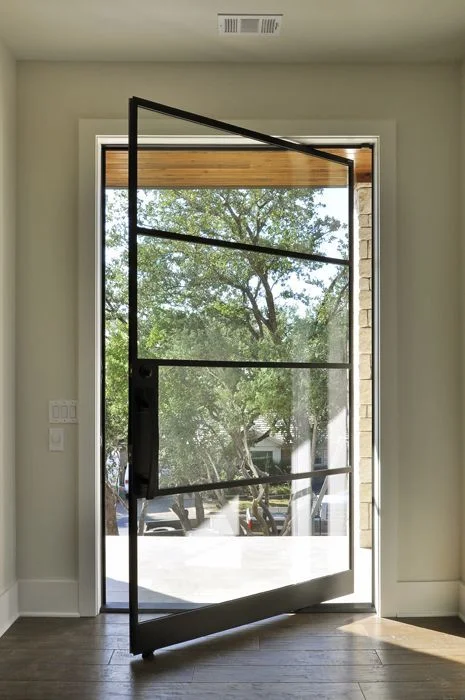
Because the pivot point sits inboard of the door edge, part of the slab swings outward as the rest swings in. The door appears to rotate in place. It is the reason a pivot entry reads so differently from a conventional door even before you notice the scale.
Steel is the natural material for the format. A slab that large in wood will move with humidity and eventually cup or bow, and in aluminum it needs a deep section to stay flat. A welded steel frame stays true at sizes where other materials start to argue, which is why almost every oversized modern entry you see in Austin is steel.
Key Features of Our Steel Pivot Doors
Floor-mounted pivot hardware
The hinge set carries the slab weight into the structure below. We specify the pivot to the finished slab weight with headroom to spare, because hardware run at the edge of its rating is what produces a door that sags in year three.
Oversized proportions
Pivot construction lets the slab go far beyond standard door sizes. Tall, wide entries that would be impractical on butt hinges become routine, which is the whole point of choosing the format.
Balanced, one-hand operation
Set up correctly a heavy pivot slab moves with light pressure and stops where you leave it. The feel of the swing is the detail people remember, and it comes from the hardware specification and the setup, not from the weight of the door.
Concealed or minimal frame
The jamb can be reduced to a shadow line or hidden in the wall build-up so the slab reads as a single plane of steel and glass set into the masonry.
Thermally broken construction
A thermal barrier through the frame and slab keeps the interior face closer to room temperature. On a large west-facing entry in Central Texas that materially affects the comfort of the entry hall.
Multipoint security hardware
Oversized slabs need locking that engages at several points rather than one deadbolt in the middle. Hooks or bolts at the head and sill pull the slab into its seals and hold it flat.
Benefits of a Steel Pivot Entry
A pivot door is usually the most-photographed element of a house. It also has to work every day, and steel lets it do both.
- Scale without struggle. The pivot mechanism means a very large slab still opens easily, so nobody has to shoulder the front door.
- The slab stays flat. Welded steel construction resists the cupping and bowing that plague large doors in other materials through Central Texas humidity swings.
- A genuine architectural statement. An oversized steel pivot sets the tone for the whole elevation and is one of the few upgrades guests comment on unprompted.
- Strong curb appeal returns. Entry doors are consistently among the improvements that most change how a house presents from the street.
- Security that matches the look. A steel slab with multipoint locking is a substantially harder target than a standard residential door.
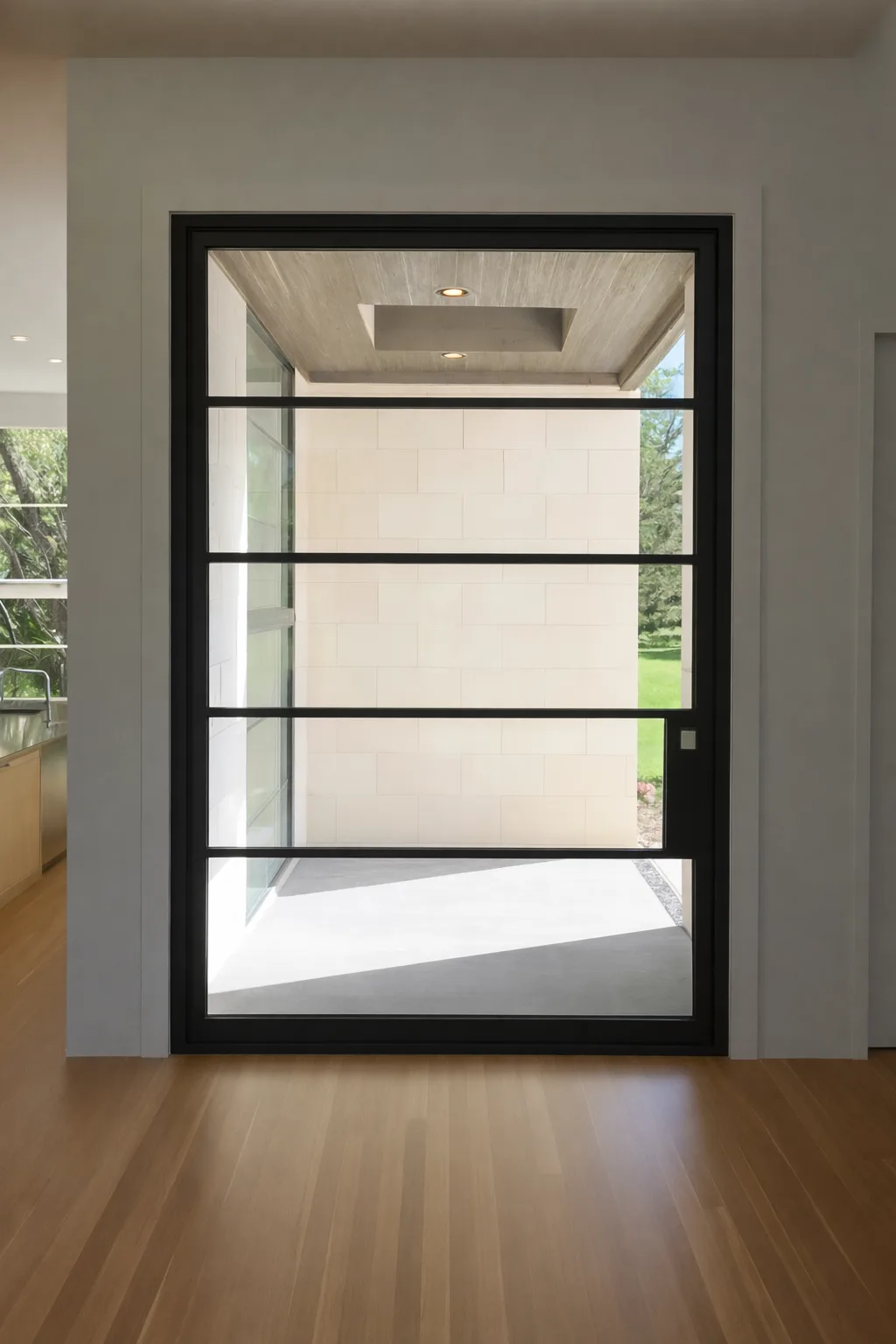
- Clean sightlines. Slim steel framing around a glazed panel keeps the entry bright without giving up the solidity you want at a front door.
Customization Options
Pivot entries are drawn from scratch for the opening. These are the choices that shape the finished door.
Size and proportion
Slab width and height are set by the architecture and the pivot hardware rating rather than by stock sizes. We work the proportion against your elevation so the door sits right in the facade.
Glazing layout
Full-lite for maximum light, a narrow vision slot for privacy with a little daylight, solid steel for a completely closed face, or a divided arrangement picking up a line from the windows. Review the glass options before you decide.
Finish
Matte black remains the most requested finish on Austin entries. Bronze, graphite, warm gray and clear-coated raw steel showing the mill surface are all available, and finishes can be matched across steel fixed windows on the same elevation.
Pivot position
Moving the pivot point closer to the jamb gives a more conventional swing; setting it further inboard produces the dramatic rotate-in-place effect and reduces the projection into the entry path.
Hardware
Full-height pulls, offset bar handles and flush pulls, specified in a finish that either matches or deliberately contrasts with the slab. See the lockset options for the security specification.
Sidelites and transoms
A pivot slab can be flanked by fixed glazing or capped with a light above to widen the composition. We also build dedicated doors with sidelites and transom configurations.
Materials & Craftsmanship
Pivot slabs are fabricated from steel sections sized for the span, welded at the corners, then dressed and ground so the perimeter reads as one continuous edge. On a door this large any weld that telegraphs through the finish will be seen from across the courtyard, so the metal preparation gets the time it needs.
Flatness is the discipline that matters most. A large slab is built and checked in the jig, and it is hung and swung in the shop on its actual pivot set before it is finished. A door that is out of plane by a small amount at the shop will be out by a visible amount at the strike edge once it is twelve feet tall.
Finishing runs through degreasing, mechanical surface preparation and a coating system chosen for full sun exposure. An Austin entry that faces west takes hard UV for hours a day, and the coating specification is written for that rather than for a shaded elevation.
The structural interface gets designed, not assumed. Pivot hardware transfers real load into the slab below and the header above, so we confirm what the floor build-up and structure can accept before fabrication. Austin's expansive clay soils move seasonally, and we build adjustment range into the installation so a slab that is plumb in the spring is still plumb the following winter.
Where Steel Pivot Doors Work Best
Modern and contemporary front entries
The signature use. A tall steel pivot against limestone, stucco or board-formed concrete is the defining move of a lot of recent Austin residential architecture.
Double-height entry halls
Where the entry volume runs up two storeys, a standard-height door looks stranded. A pivot slab scaled to the volume resolves the proportion.
Courtyard and garden gates
The same construction works as a heavy garden or courtyard door, where the slab has to be substantial and weather-exposed on both faces.
Hotel, gallery and office entrances
Commercial entries benefit from the scale and from a slab that tolerates constant use. Steel handles the cycle count that a public entrance demands.
Renovations to mid-century homes
Replacing a small original entry with a properly scaled pivot is one of the higher-impact changes available on a remodel, without touching the rest of the facade.
Interior room dividers
Pivot construction also suits oversized interior openings between a hall and a study. For lighter interior work see our steel interior doors.
Why Choose OMG Steel Doors for Your Pivot Entry
Pivot doors are the least forgiving product we build, and that is precisely why we keep the whole process in house. The hardware has to be matched to the finished slab weight, the structure has to accept the load, the slab has to be dead flat, and the opening has to be plumb. Getting four things right at once is a coordination problem, and coordination problems are solved by having one company responsible for all four.
Our engineers draw each pivot to the surveyed opening and specify the hardware against the calculated slab weight rather than an estimate. We would rather resolve a structural question on the drawings than discover it when a very heavy door arrives on site.
We work with Austin architects, custom home builders and homeowners across the greater Austin area and Central Texas, and we take projects in Dallas, Houston, San Antonio and Fort Worth. Completed entries are shown on our projects page, and the fitting process is described on the installation page.
Every quote covers the fabricated slab, frame, glass, threshold, weatherstripping, pivot hardware, locking hardware and professional installation. Pricing is per project because size, glass, finish and hardware all move the figure, so we price against your measured opening rather than a list.
Frequently Asked Questions
How large can a steel pivot door be?
Large enough that the constraint is usually the building rather than the door. The governing factors are the pivot hardware rating, the finished slab weight and what the floor and header can carry. Entries well beyond standard door sizes are routine in steel. Send us your opening and elevation and our engineers will confirm what is achievable.
Is a heavy pivot door hard to open?
No, when it is set up properly. The pivot carries the weight vertically into the structure, so what you feel at the handle is rotational resistance, not the mass of the slab. A correctly specified pivot set moves a very heavy door with one hand. If a pivot door feels heavy, that is a setup or hardware-rating problem rather than a property of the format.
Are steel pivot doors secure?
Yes. A welded steel slab is inherently more resistant to forced entry than a standard residential door, and we specify multipoint locking that engages at the head and sill rather than relying on a single deadbolt. The pivot hardware itself is concealed within the floor and head, so there are no exposed hinge pins.
Do pivot doors seal against weather and dust?
They do. Compression seals run the perimeter and the multipoint lock pulls the slab into them evenly. This matters in Central Texas during cedar and oak pollen season, when a poorly sealed entry becomes obvious very quickly. A thermally broken slab also keeps the interior face from radiating heat into the entry hall in summer.
Can a pivot door swing both ways?
It can be built to, though most residential entries are set up to swing one way with a defined closed position and full weather seals. Double-action swing is more common on interior and commercial openings. Tell us how the entry gets used and we will recommend the arrangement.
What does a pivot door need structurally?
The floor has to accept the pivot pin and the load it carries, and the head needs a fixing point for the top bearing. On new construction we coordinate this with your builder before the slab is poured. On a renovation we survey the existing build-up first, which occasionally changes the pivot position or the hardware selection.
How do I maintain a steel pivot door?
Very little is required. Wash the slab with mild soap and water a few times a year, more often on an exposed elevation. Check the pivot set annually and have it adjusted if the swing feel changes. Touch up coating chips when they happen rather than later. The finish is what protects the steel, so keeping it intact is the whole maintenance program.
Design your steel pivot entry
Send us your opening dimensions, the elevation and any architectural drawings, and we will come back with a configuration, a hardware specification and a quote. Serving Austin and Central Texas, with projects across Dallas, Houston, San Antonio and Fort Worth.


