Steel Interior Doors in Austin, TX
Interior steel doors define rooms without making the home feel closed off.
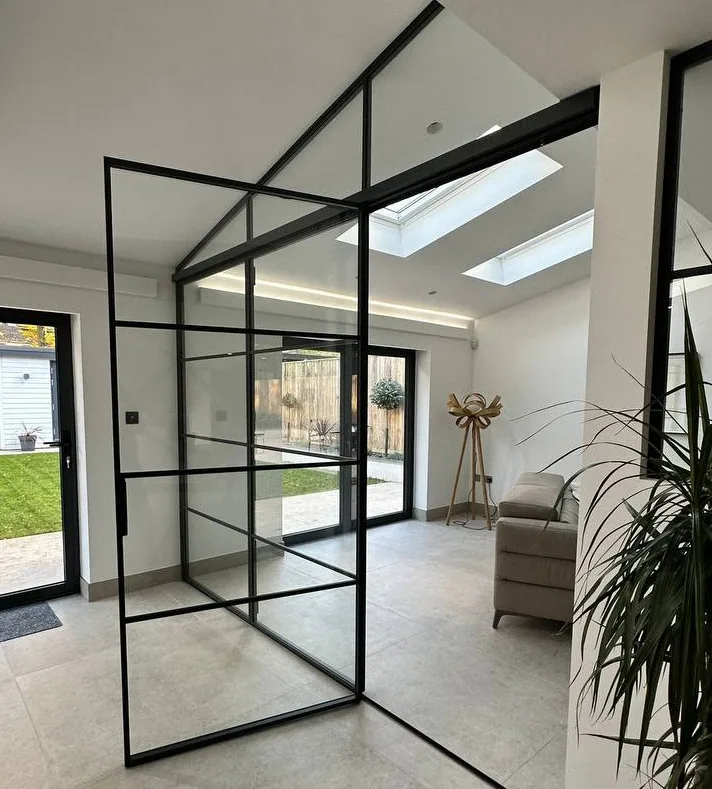
Interior doors help shape how a home feels day to day. A well-designed steel interior door can preserve privacy, soften sound transfer and still keep spaces visually connected through glass and slim framing.
Our interior systems range from classic hinged doors to modern sliders and pocket-style solutions, depending on how much floor space you want to preserve. They are especially popular for home offices, pantries, kitchens, wine rooms and transition points between entertaining spaces.
For homeowners drawn to a minimal-steel, maximum-glass look, custom interior steel doors deliver elegant separation while keeping the overall environment bright and open.
Internal sliding configurations are particularly effective in tighter rooms. They save floor space, glide quietly and use slim steel profiles to maximize natural light while maintaining the strength and finish quality steel is known for.
Why Homeowners Choose This Style
- Privacy-focused room separation with modern sightlines
- Available as hinged, sliding or pocket-inspired systems
- Slim profiles maximize borrowed light between rooms
- Customizable handles, bars, glass and finish details
Popular Applications
- Kitchen
- Closet
- Office
- Wine room
Need help choosing the right configuration? Visit our product catalog or request a quote and we will help match the design to your opening, layout and finish preferences.
Why Build an Interior Door in Steel
An interior steel door does a different job from an exterior one. There is no weather to keep out and no security burden to speak of, which frees the design in ways that matter. Frames can be slimmer, glazing can be single rather than insulated, and the finish range widens considerably because the coating does not have to survive Texas sun.
What you gain is the thing steel does better than any alternative indoors: a very fine frame around a large pane of glass. A glazed steel partition separates a study from a hall while letting light and sightlines pass straight through, and it does so with a frame line that reads as a drawn edge rather than as a piece of joinery.
This is why steel interior doors have moved from industrial conversions into mainstream residential architecture. The look references warehouse and factory glazing, but the practical appeal is that it lets you close a room off acoustically and visually without making it dark, and without making the plan feel chopped up.
Key Features of Our Steel Interior Doors
Very slim sightlines
Without the insulation and weathersealing demands of an exterior door, interior frames can be reduced to a genuinely fine section, which is the main reason to choose steel indoors.
Welded frame construction
Corners are welded, dressed and ground so the frame reads as continuous. Interior doors are viewed from close range in good light, so the joint quality is more exposed than on an exterior opening.
Single or laminated glazing
Interior openings do not need insulated units, so a single pane keeps the door light and the sightline clean. Laminated glass is available where acoustic performance or safety glazing is required.
Configurable as swing, slide or pivot
The same construction works as a hinged leaf, a surface-mounted slider on an exposed track, a concealed pocket door, or a pivot for a large opening.
Wide finish range
Interior applications allow finishes that would not last outdoors, including blackened and waxed steel, clear-coated raw steel with the mill surface visible, and a broader palette of coated colors.
Fixed panels and partitions to match
Doors can be built as part of a larger glazed partition system, so a study wall becomes a single composition of fixed panels with an opening leaf within it.
Benefits of Steel Interior Doors
Interior steel glazing is usually specified to solve a plan problem, not just a style preference.
- You can close a room without darkening it. A glazed partition gives acoustic and visual separation while daylight continues through the plan.
- Open-plan spaces become usable. A study or media room that can be shut off when needed makes an open plan work far better in practice than leaving it entirely open.
- Borrowed light reaches interior rooms. Rooms with no exterior wall can take daylight from adjacent spaces through glazed steel partitions.
- The frame almost disappears. Steel's strength allows a section fine enough that the eye reads the glass and the room beyond rather than the door.
- It is genuinely durable. Interior steel doors do not swell, warp or delaminate, and a slab that closes properly on day one continues to.
- Finish options are broader indoors. Blackened, waxed and raw clear-coated steel are all viable inside in a way they are not on an exposed elevation.
Customization Options
Interior doors are drawn to the opening and to how the room is used. These are the main decisions.
Operation
Hinged for the simplest and best-sealing option, surface sliding on an exposed track where floor space is tight, concealed in a wall as a pocket door, or pivoted for a large opening.
Glazing bar layout
A single clear pane for a pure plane of glass, or a divided grid in the industrial idiom. Bar spacing and proportion do more to set the character than any other choice, and we draw them to your opening.
Glass type
Clear for maximum transparency, obscured, reeded or fluted for privacy in a bathroom or dressing room, or laminated where sound matters. See the glass options.
Finish
Matte black remains the most requested, with blackened and waxed steel, clear-coated raw steel and a wide range of coated colors also available. Finishes can be matched to wine cellar doors or other steel elements in the house.
Single, pair or partition
A single leaf, a French-style pair, or a full glazed partition with fixed panels either side of an opening leaf, which is the common arrangement for a study wall.
Hardware
Lever sets, pulls and flush pulls in matched or contrasting finishes, with privacy locking where the door serves a bathroom or bedroom. See the lockset options.
Materials & Craftsmanship
Interior doors are fabricated from steel section, welded at the corners, then dressed and ground flat. The finish standard here is higher than on exterior work, not lower, because an interior door is seen from a foot away in good light and often with a raking sidelight across its face that shows every imperfection in the metal preparation.
Frames are built as welded units and the leaf is hung and swung in its own frame before finishing, so reveal gaps and latch engagement are set in the shop. On a slim-section interior door the reveal gap is a visible design line, and an uneven one is immediately noticeable in a way it would not be on a heavier door.
Because there is no weather exposure, the finishing options widen. Blackened and waxed steel, oil-rubbed treatments and clear coats over raw mill surface are all viable indoors, and each is applied over properly prepared metal. These finishes have depth and variation that a uniform coated color does not, which is much of their appeal.
Glazing is set into the frame with the beads detailed to stay fine, since a heavy glazing bead undermines the whole point of a slim steel door. Where a partition includes both fixed panels and an opening leaf, the sections and bar lines are drawn so that the door reads as part of the wall rather than as an insertion into it.
Where Steel Interior Doors Work Best
Home offices and studies
The most common request by a wide margin. Glazing lets the room stay part of the house visually while closing for calls and concentration.
Open plan divisions
Separating a kitchen from a dining room or a living space from a media room, with the option to open the plan back up.
Pantries and butler's pantries
A glazed steel pantry door is both practical and a strong visual detail in a kitchen, particularly with reeded or fluted glass.
Primary suites and dressing rooms
Obscured glazing gives privacy while keeping light moving between the bedroom and the dressing area.
Stair and hall enclosures
Enclosing a stair for acoustic or thermal zoning without turning the hall into a dark corridor.
Loft and warehouse conversions
East Austin conversions where a steel partition is consistent with the building's original character rather than imposed on it.
Why Choose OMG Steel Doors for Interior Work
Interior steel is unforgiving of poor metalwork. There is no distance, no weather patina and no bright exterior light to hide behind, so weld dressing, surface preparation and the evenness of the finish are all directly on display. We fabricate to that standard because we know where these doors get looked at from.
Slim sections demand accurate installation. A frame that is a fraction out of plumb produces a tapering reveal gap, and on a fine-section interior door that taper is obvious. Because we design, fabricate and install in house, the door is built to the surveyed opening and set by people who understand what the tolerance actually needs to be.
We work with homeowners, Austin architects, interior designers and custom builders across the greater Austin area and Central Texas, and take projects in Dallas, Houston, San Antonio and Fort Worth. Completed interior work appears on our projects page.
Quotes include the fabricated leaf, frame, glass, hardware and professional installation. Interior work is often coordinated alongside exterior doors and steel windows on the same project so that finishes and detailing run consistently through the house. The installation page describes how we handle fitting.
Frequently Asked Questions
Do steel interior doors block sound?
A hinged steel door with proper seals gives good acoustic separation, and laminated glass improves it further. A surface slider or pocket door gives noticeably less, because neither can compress against a seal on all four sides. If sound isolation for a study or media room is the priority, we will recommend a hinged leaf and explain the trade-off rather than let you find it out later.
Are interior steel doors heavy?
Less than people expect. Interior doors use lighter sections than exterior ones and single glazing rather than insulated units, so a glazed steel interior door is often comparable in weight to a solid timber door of the same size. Hinges are specified to the actual leaf weight so the door swings easily and stays hung correctly.
Can steel interior doors be made in colors other than black?
Yes. Black dominates because it suits the industrial reference, but the full range of coated colors is available, along with bronze, graphite, warm grays, blackened and waxed steel and clear-coated raw steel. Raw and blackened finishes have a variation and depth that a flat color does not, and they work particularly well indoors where they are protected.
Is safety glass required in an interior door?
Glazing in a door is generally required to be safety glazing under the building code, and we specify tempered or laminated glass accordingly. Laminated has the additional advantage of better acoustic performance and holding together if broken. We handle the compliance question as part of the specification rather than leaving it to you.
Can I get a glazed steel partition rather than just a door?
Yes, and it is a common request. We build the fixed panels and the opening leaf as one coordinated system so the glazing bars align across the whole wall and the door reads as part of the partition. This is generally the better result than installing a door into a separately built partition.
Will an interior steel door work in a bathroom?
Yes, with the right glazing. Obscured, reeded or fluted glass gives privacy while still passing light, and privacy locking is specified as standard for these openings. Steel is unaffected by the humidity in a bathroom in a way that a timber door is not, so it stays flat and keeps closing properly.
Do these doors suit traditional houses as well as modern ones?
They can, though the glazing bar layout is what determines it. A fine divided grid in a period-appropriate proportion sits comfortably in an older Austin home, whereas a single large pane in a very slim frame reads as distinctly contemporary. We draw the bar layout against the room rather than applying a house style.
Bring light through your plan
Send us the opening dimensions and a photo of the space, and we will come back with a glazing bar layout, a finish recommendation and a quote for your steel interior doors. Serving Austin and Central Texas, with projects across Dallas, Houston, San Antonio and Fort Worth.


